
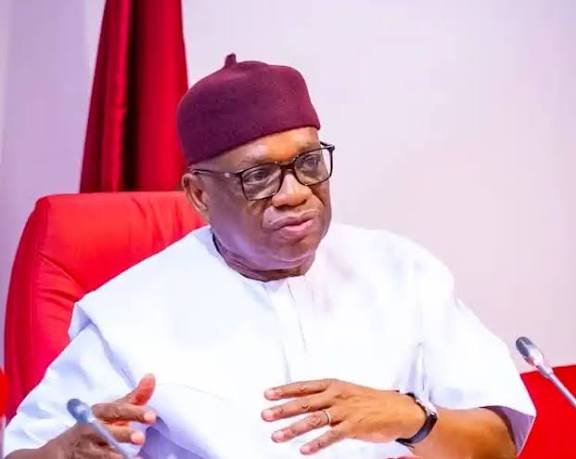
Senator Orji Uzor Kalu has said he has no immediate ambition to contest the 2027 presidential election, but added that the will of God would determine his future political direction.
Kalu, a former governor of Abia State and presidential candidate in the 2007 election, spoke during an interview with the Senate Press Corps after receiving the Best Impactful Representation Award at the National Assembly.
The lawmaker was reacting to a prediction by Prophet Ayodele of the Inri Spiritual Church that he would become Nigeria’s president before the end of 2027.
Kalu said he believed leadership positions were ultimately determined by God, noting that he remained qualified to lead the country if the opportunity came.
“Yes, I say the will of God is always the will of God. If God says I will be anything at my age, or any age, nobody can stop the will of God,” he said.
“After all, I am capable of being president. Am I not capable of being president? I ran for it when I was much younger. So the will of God always prevails.”
However, the senator said he was not currently planning to enter the presidential race, explaining that he was comfortable serving in the Senate.
“But for me, am I ready to run for president? The answer is no. I am in my house. I want to sit in this Senate,” Kalu said.
He added that he enjoyed his current role and had no reason to hide any political ambition if one existed.
“I have no ambition of any type, because the party is supreme. It is only the party that decides who their candidates will be,” he said.
Kalu, who represented Abia State as governor between 1999 and 2007, said he remained focused on legislative duties and representing the people of Abia North.
He also thanked his constituents for their continued support, saying his political journey had been built on service and delivery.
The senator said his priority remained supporting projects that would improve the lives of Nigerians, including infrastructure development, education and agriculture.
“I do not do empowerment, mostly. I refuse to do empowerment because empowerment is not the way to save this economy. The way to save this economy is going back to agriculture, providing roads to the rural areas, and sending children to school for them to learn,” he said.