
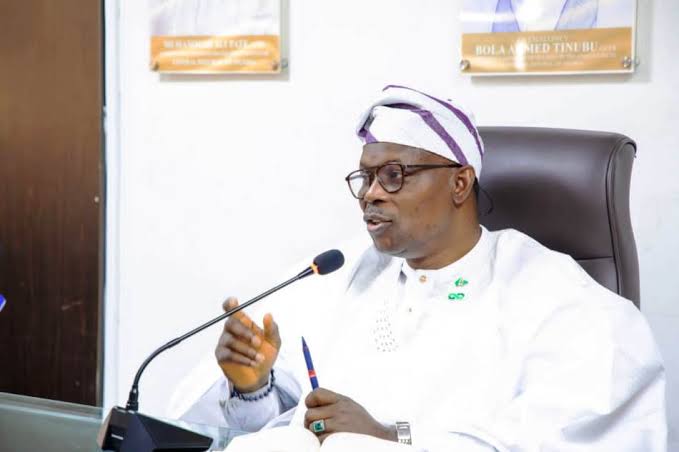
Federal Government has reaffirmed its commitment to strengthening partnerships and investments in cancer prevention, early detection and treatment as part of efforts to reduce the burden of cancer in Nigeria.
The Minister of State for Health and Social Welfare, Dr Iziaq Adekunle Salako, stated this when he received members of the Global Advisory Council of the National Cancer Control Plan Technical Working Group in Abuja.
He noted that cancer remains a major global health challenge, with the burden particularly severe in Africa due to late presentation, high mortality, limited infrastructure, inadequate manpower and constrained resources.
The Minister said the Federal Government had placed partnerships at the centre of the implementation of the National Cancer Control Plan 2026–2030, stressing that international expertise and collaboration would be critical to achieving sustainable progress.
He said the administration of President Bola Ahmed Tinubu has continued to prioritize cancer prevention, citing the inclusion of Human Papillomavirus (HPV) vaccination in the routine immunisation schedule as a major step towards preventing cervical cancer, in addition to expanding cervical cancer screening, improving public awareness and integrating screening services into primary healthcare to promote early detection.
“Prevention is better and cheaper than cure. We are doing everything we can to expand immunisation, improve screening and ensure that cancer is detected at a very early stage,” he said.
Salako disclosed that the Federal Government had commenced the construction of six cancer centres of excellence, with three already completed and the remaining three at various stages of development, adding that President Tinubu had also approved the procurement of 35 additional linear accelerators between 2027 and 2029, aimed at significantly expanding access to radiotherapy services and strengthening Nigeria’s cancer treatment capacity.
Salako commended members of the Global Advisory Council and the Technical Working Group for their commitment, expertise, networks and resources in supporting Nigeria’s goal of achieving improved cancer outcomes, and expressed appreciation to the Council for its support to Nigeria’s pathology laboratories, assuring the members that the donated equipment would be deployed effectively to improve diagnostic services.
Salako urged the Council and the Technical Working Group to continue building wider partnerships and mobilising expertise and resources from across the world to support Nigeria’s cancer control agenda.
The Minister expressed optimism that sustained collaboration among government, experts, development partners and other stakeholders would contribute significantly to the long-term goal of reducing and ultimately eliminating the burden of cancer.“On behalf of the Federal Government of Nigeria, I deeply appreciate what you are doing for us. Your commitment, sacrifice and dedication are highly valued,” Salako said.
While formally inaugurating the Blood Cancer Consortium, Salako described it as an important platform for advancing knowledge, collaboration and improved outcomes in the management of blood cancers, rearfirming that Nigeria remained committed to ensuring the partnerships established through the National Cancer Control Plan translate into tangible benefits for Nigerians and contribute to global efforts to combat cancer.