
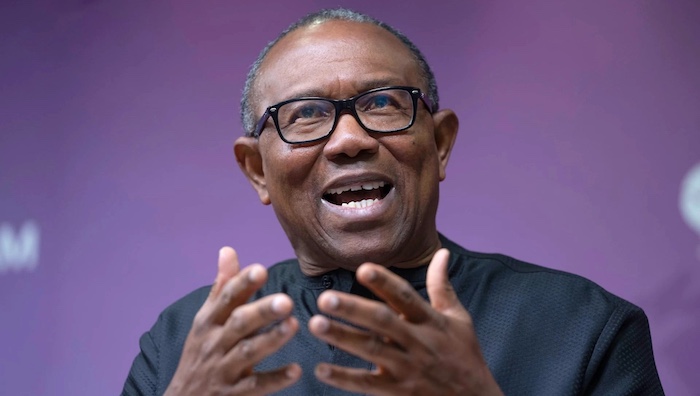
Former presidential candidate of the Labour Party, Peter Obi, has said Nigeria’s vulnerability to global economic shocks is largely due to poor planning and the absence of strategic buffers such as petroleum reserves.
In a post titled: “When Countries Fails To Plan”, and shared on his X (formerly Twitter) account on Thursday, Obi explained that developments in the global economy often have an immediate effect on Nigeria, citing the recent tension involving Iran as an example.
According to him, the geopolitical tension pushed global oil prices higher, which in turn triggered an increase in fuel prices across Nigeria.
“Many people wonder why any adverse development in the global economy quickly impacts Nigeria,” Obi wrote.
He noted that the recent spike in petrol and diesel prices demonstrates how quickly external shocks can ripple through the Nigerian economy.
“A recent example is the tension involving Iran, which led to an increase in global oil prices and, subsequently, a rise in petroleum prices in Nigeria,” he said.
The former Anambra governor explained that petrol which sold for less than ₦1,000 per litre just a few weeks ago now costs more than ₦1,200, while diesel prices have also surged significantly.
“A few weeks ago, petrol was selling for less than ₦1,000 per litre, but today it costs over ₦1,200 per litre. Diesel, which was also priced below ₦1,000 per litre, is now over ₦1,500 per litre. These rapid increases illustrate how quickly external shocks can affect the Nigerian economy,” he stated.
Obi argued that the key difference between Nigeria and many other countries is the presence of strategic petroleum reserves used to cushion supply disruptions and price volatility.
“The reason for this is straightforward: most countries, whether they are oil-producing or non-oil-producing, maintain strategic petroleum reserves to cushion against supply or price shocks,” he said.
He added that such reserves allow governments to release stored fuel during global disruptions in order to stabilize domestic supply and prices.
“This means that when there is a disruption in the global oil market, they can release part of these reserves to stabilize supply. However, Nigeria lacks such a buffer, so the impact is felt almost immediately,” Obi explained.
The former governor stressed that the situation reflects a broader problem of inadequate long-term planning.
“The underlying issue is a lack of planning. Countries that engage in planning create buffers against shocks, while those that do not remain vulnerable to them,” he said.
Obi concluded his remarks with a warning about the consequences of poor governance and a call for a more strategic approach to national development.
“The old maxim remains true: when a country fails to plan, it has already planned to fail.”