
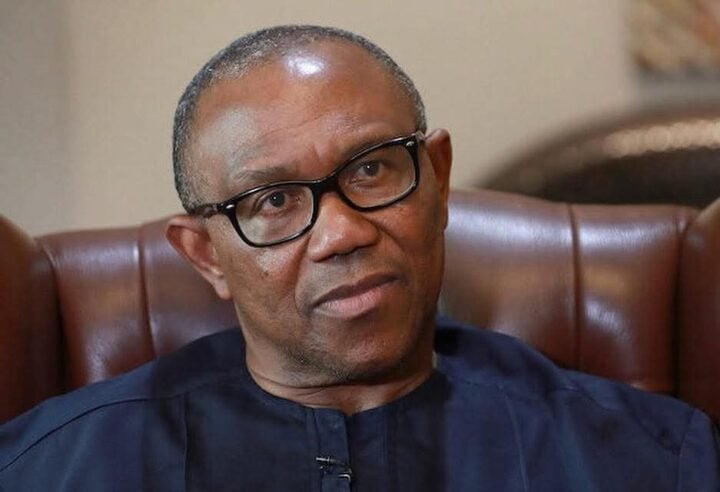
Former Labour Party presidential candidate, Peter Obi, has drawn a sharp comparison between India’s rising economic fortunes and Nigeria’s steady decline, warning that the gap between both countries reflects years of poor leadership choices and misplaced priorities.
Reacting to reports that India has overtaken Japan to become the world’s fourth-largest economy, Obi described the development as both remarkable for India and deeply troubling for Nigeria, noting that the two countries once shared similar economic paths.
“Over the weekend, it was announced that India has become the fourth-largest economy in the world, in terms of nominal GDP, surpassing Japan,” Obi stated in a post on X.
Citing IMF estimates for 2025, Obi noted that India’s GDP is projected at about $4.187 trillion, slightly ahead of Japan’s $4.186 trillion, with India now positioning itself to overtake Germany, currently estimated at $4.74 trillion, as the world’s third-largest economy.
While applauding India’s progress, Obi said the milestone raises fundamental questions about Nigeria’s economic direction, especially given their comparable pasts.
“While this is a remarkable achievement for India, it raises questions about Nigeria’s economic performance. I have undertaken a comparison of the two countries, as they once shared a similar economic trajectory,” he said.
Obi referenced World Bank data, explaining that in 2007, India’s nominal GDP per capita stood at about $1,022, while Nigeria’s was higher at approximately $1,816. By 2015, India’s figure had risen to around $1,584, compared to Nigeria’s $2,586.
However, he warned that projections for 2025 show a dramatic reversal.
“Based on IMF World Economic Outlook projections, by 2025, India’s nominal GDP per capita is estimated to be about $2,878, while Nigeria’s is expected to decline to about $807,” Obi said.
The former Anambra State governor expressed concern that Nigeria’s decline has occurred despite massive financial inflows.
“Despite significant subsidy savings, substantial revenue growth, and excessive borrowing—more than all previous governments combined from 1999 to 2023—Nigeria’s performance remains troubling,” he noted.
According to him, Nigeria’s combined revenue between 2023 and 2025 is estimated at about ₦200 trillion ($135 billion), yet there has been no visible improvement in healthcare, education, poverty reduction, or general welfare.
Obi lamented that poverty, insecurity, and the collapse of small and medium-sized businesses continue to worsen, while electricity remains unreliable and expensive. He added that the rising costs of food, rent, and transportation have pushed basic living beyond the reach of many Nigerians.
Calling for a shift in leadership culture, Obi urged Nigerians to unite around competence and integrity.
“I continue to call for national unity to build a leadership consensus anchored on competence, compassion, and character,” he said.
He stressed that such leadership must prioritize healthcare, education, infrastructure, agriculture, and technology, while cutting waste, reducing the cost of governance, and ensuring transparency and accountability.
Obi added that only accountable governance can empower citizens, create jobs, support businesses, strengthen security, and restore trust in public institutions.
“Only through united collective action, transparency, and visionary leadership can Nigeria close the gap with nations like India and ensure that its wealth translates into prosperity, security, and opportunity for all citizens,” he said.