
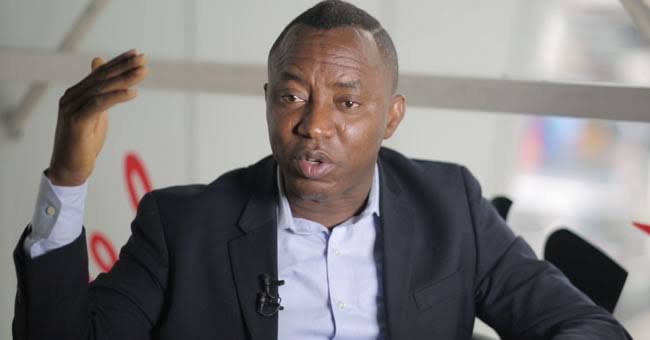
2027 Presidential candidate, Omoyele Sowore has unveiled an ambitious education agenda for the 2027 general election, promising free public education from early childhood to the university level, semester grants for students, nationwide digital learning infrastructure and a commitment to dedicate 30 per cent of Nigeria’s national budget to education.
In a detailed policy statement released under the #Sowore2027 campaign, Sowore described education as the bedrock of national development, saying his administration would make it the centrepiece of economic growth, innovation, democratic development and social justice.
“Education is the greatest investment any nation can make in its future. It is the foundation of economic prosperity, scientific advancement, democratic participation, national security, and social justice,” he said.
According to him, every Nigerian, regardless of economic status or place of residence, should have access to quality education without financial barriers.
He said a government under his leadership would abolish tuition across public educational institutions, arguing that no Nigerian should be denied an education because of poverty. Rather than expanding student loan schemes, he pledged that students in public tertiary institutions would receive semester education grants to support both academic and living expenses.
“Public education will be free at every level, from early childhood through university. No Nigerian child or adult will be denied the opportunity to learn because of poverty,” Sowore stated.
He added, “Rather than burdening young people with exploitative student loans, students in public tertiary institutions will receive semester education grants to support their academic and living expenses. Investing directly in students is an investment in the nation’s future, and no society has ever developed by making education inaccessible to its citizens.”
Sowore also proposed far-reaching structural reforms to Nigeria’s education system, including restoring a five-year primary school system followed by five uninterrupted years of secondary education. Under the proposal, most university degree programmes would run for four years, except courses requiring longer internationally recognised professional training.
To expand access to higher education, he pledged federal support for the establishment of Community Colleges in all 774 local government areas, offering two-year associate degree programmes, vocational education, entrepreneurship training and workforce development tailored to local economic needs.
The former presidential candidate also outlined plans to modernise learning through technology by connecting every public school to high-speed internet while introducing digital classrooms, virtual laboratories, online libraries and cloud-based learning platforms.
He said artificial intelligence, robotics, coding, cybersecurity, digital literacy, data science and computational thinking would become core components of the national curriculum from primary school.
According to him, “Artificial intelligence and digital technology will become central components of learning rather than privileges available only to a few.”
Recognising the importance of technical education, Sowore said vocational and technical institutions would receive equal recognition and funding as universities, while existing polytechnics and monotechnics would be upgraded into specialised universities focusing on engineering, applied sciences, technology, entrepreneurship and industrial innovation.
On teacher welfare, he promised improved salaries, better housing support and continuous professional training through specialised Teachers’ Institutes to equip educators with modern teaching skills and digital competencies.
He also pledged to protect university autonomy, academic freedom and independent student unionism, insisting that campuses must remain centres of intellectual inquiry rather than political control.
“Universities must remain centres of independent thought rather than instruments of political control,” he said.
Sowore further promised increased investment in research, proposing a National Research and Innovation Fund to support studies in medicine, agriculture, renewable energy, biotechnology, manufacturing, climate science, artificial intelligence and defence technology.
He said the government would also establish a National Education and Innovation Cloud to provide students and teachers with free access to academic journals, digital libraries, AI learning assistants, research databases and educational software.
To improve learning conditions, he proposed massive investment in school infrastructure, including modern classrooms, laboratories, libraries, internet connectivity, renewable electricity, clean water, sports facilities and disability-friendly infrastructure.
The manifesto also includes a nationwide school feeding programme for pupils in public primary and secondary schools, expanded healthcare and counselling services, menstrual hygiene support and mental health programmes.
Sowore said his administration would encourage Nigerian academics and professionals in the diaspora to return home through a National Academic Return Programme offering competitive remuneration, research funding, housing support and flexible academic appointments.
He also promised lifelong learning opportunities through online education platforms, community colleges and continuing education centres.
On funding, the presidential hopeful pledged to allocate 30 per cent of Nigeria’s annual budget to education while introducing transparent budgeting, digital procurement, independent audits and blockchain-based funding mechanisms to curb corruption.
“Finally, our commitment to education will be matched by our commitment to good governance. A #Sowore2027 administration will allocate 30 percent of the national budget to education, treating it as a strategic investment rather than a recurring expense,” he stated.
Sowore said the overall objective of the reforms is to build “an education system that is free, inclusive, technology-driven, research-intensive, democratic, globally competitive,” capable of producing innovators, entrepreneurs, scientists, skilled professionals and leaders who can transform Nigeria into a modern and prosperous nation.