
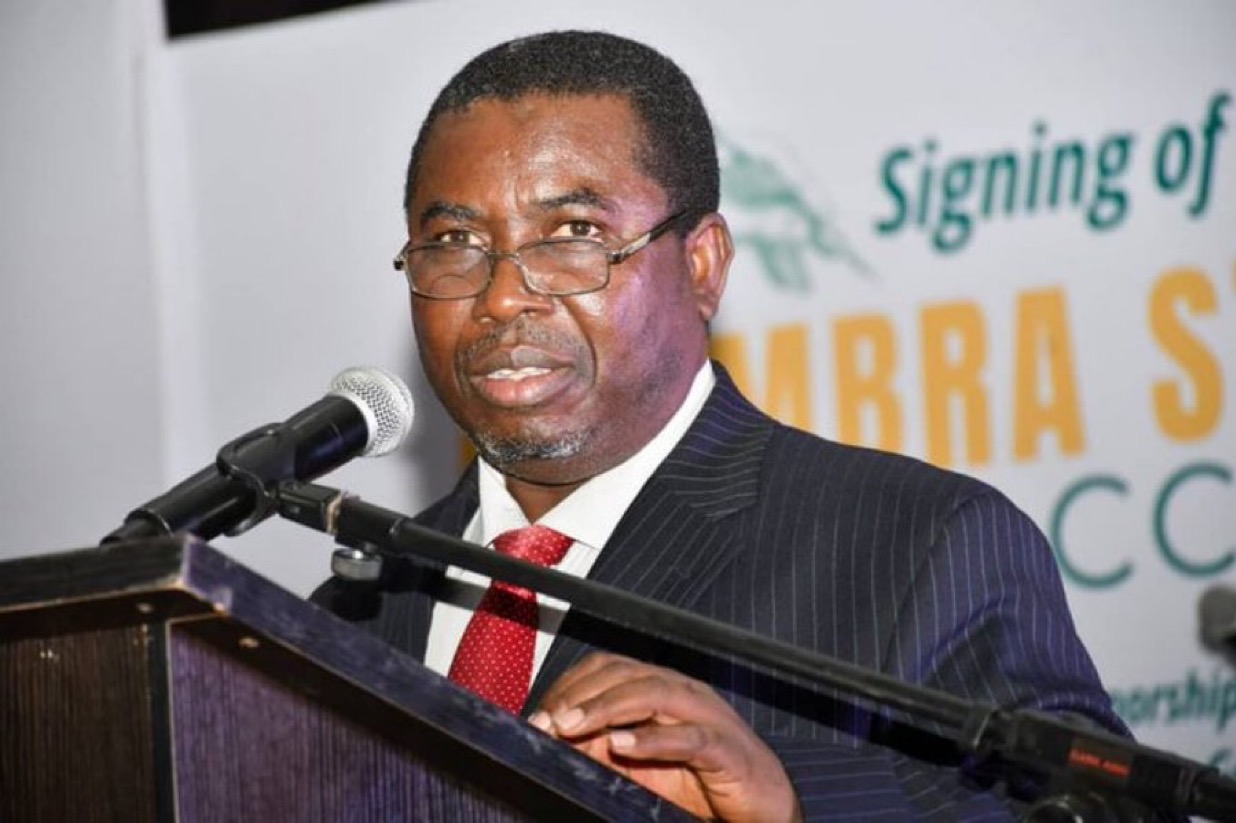
In the 2027 General Election, the most dangerous weapon will not be a ballot-snatcher’s gun, but a smartphone user’s lie amplified by an uncritical broadcast station. We must ensure that Nigeria’s airwaves remain a sanctuary for truth, not a megaphone for chaos.
With this stark warning issued on Tuesday, April 8, 2026, the Chairman of the Independent National Electoral Commission (INEC), Prof. Joash Amupitan, SAN, set the tone for a significant discussion with broadcast industry leaders at the 81st General Assembly of the Broadcasting Organisations of Nigeria (BON). He highlighted the importance of strict compliance with the Electoral Act 2026 and a renewed commitment to professionalism as the country prepares for the 2027 General Election.
Addressing Chief Executive Officers and senior media executives, the INEC Chairman described the information space as the new frontline of democratic contestation, noting that elections are no longer fought solely at polling units but increasingly within the media ecosystem.
“As we sit here today, April 8, 2026, the countdown has begun: 283 days remain until the Presidential and National Assembly Elections on January 16, 2027, and 304 days until the Governorship and State Houses of Assembly Elections on February 6, 2027,” the INEC Chairman said, stressing that the credibility of those polls would depend not only on logistics and technology, but on how responsibly the airwaves are managed.
He undertook a detailed assessment of the Electoral Act 2026 as it relates to broadcast media coverage, emphasising that the law now places clear statutory obligations on media organisations. Drawing attention to Sections 99(2)–(5) of the Act, Prof. Amupitan reiterated that state apparatus, including publicly owned media, must not be deployed to favour or disadvantage any political party or candidate. The law mandates equal allocation of airtime at similar hours, particularly during prime time, and guarantees equal coverage and visibility in public print media.
“With 22 registered political parties, fairness is not optional; it is statutory,” the INEC Chairman stated. “You must provide a level playing field, ensuring that no single interest group monopolises the airwaves.”
The INEC Chairman noted that violations attract stiff penalties, including fines running into millions of naira for media organisations and principal officers, and in certain instances, imprisonment. According to the INEC Chairman, the sanction regime underscores the seriousness with which electoral fairness in media coverage is treated under the law.
He also highlighted Section 96(1) of the Act, which prohibits abusive, slanderous, or inflammatory language capable of provoking ethnic, religious, or sectional tension. Prof. Amupitan warned that in a plural society such as Nigeria, careless political broadcasting can inflame divisions and destabilise the electoral environment.
“The line between robust political debate and incitement must never be blurred,” the INEC Chairman cautioned.
Prof, Amupitan further reminded broadcasters of the statutory 24-hour “cooling-off period” preceding polling day, during which political advertisements and campaign broadcasts are prohibited. The provision, the INEC Chairman explained, is designed to protect voters from last-minute propaganda, misinformation, or emotional manipulation capable of distorting electoral judgment.
“Elections are not only about campaigning; they are also about reflection,” the INEC Chairman said. “The law creates a quiet space for citizens to make independent decisions free from undue influence.”
While defending the regulatory framework, the INEC Chairman acknowledged the constitutional guarantee of freedom of expression under Section 39 of the 1999 Constitution (as amended), noting that regulation must be carefully balanced to preserve media independence. The INEC Chairman observed that the airwaves, as a finite public resource, impose a corresponding duty on the State to ensure equitable access, particularly during elections.
The INEC Chairman underscored the complementary roles of INEC and the National Broadcasting Commission (NBC), explaining that while the NBC is responsible for licensing and enforcing the Broadcasting Code, INEC issues guidelines for political campaigns and monitors compliance with electoral standards. The INEC Chairman, however, acknowledged persistent institutional challenges, including regulatory overlap, enforcement gaps, and capacity constraints in monitoring Nigeria’s vast media landscape.
He also drew attention to practical concerns, including perceived incumbency advantage in state-owned media and the growing commercialisation of political airtime, which according to him often disadvantages smaller political parties and less-resourced candidates. The INEC Chairman warned that the convergence of traditional broadcasting and digital platforms has further complicated regulation, as broadcast content is now rapidly amplified online.
“Broadcast content is no longer confined to radio and television,” he noted. “It is clipped, amplified, and weaponised online within minutes.”
To address these concerns, Prof. Amupitan proposed legal, institutional, and industry reforms, including clearer statutory definitions of “equal access,” stronger coordination between INEC and the NBC, enhanced independence of regulatory bodies, and stricter internal editorial guidelines within media organisations. He called for strengthened fact-checking mechanisms and greater transparency in political advertising, including clear disclosure of sponsorship and pricing structures.
In a direct appeal to media executives, the INEC Chairman issued three major charges ahead of 2027. He urged broadcasters to fact-check in real time, to mobilise voters against apathy, and to prioritise professionalism over profit during the election cycle.
“Do not wait for the post-mortem,” Prof. Amupitan said. “Kill the fake news on your morning shows before it reaches the afternoon bulletin.”
The INEC Chairman warned that voter apathy poses a serious threat to democratic consolidation, describing elections as the lifeblood of democracy, and cautioned that the temptation to prioritise high-paying political advertisements over balanced reporting would intensify as campaigns gather momentum.
“In this 2027 roadmap, the temptation to prioritise high-paying political adverts over balanced reporting will be great,” the INEC Chairman said. “Choose the sanctity of the ballot.”
Reiterating that INEC’s official website and digital platforms remain authoritative sources of electoral information, Prof. Amuptin assured broadcasters of continued engagement by Commission officials authorised to speak with the media.
“Elections are no longer contested only at the polling units,” the INEC Chairman declared. “They are contested in the information space. I urge the broadcast media to rise against mis- and disinformation so as to protect the sanctity of our electoral process.”
He concluded that the credibility of Nigeria’s elections depends not only on the conduct of voting but also on the fairness of the communicative environment within which political competition occurs, urging broadcast houses to discharge their responsibilities within the ambit of the law and in the overriding interest of the nation.