
As Nigeria approaches the 2027 general elections, the time has come to move beyond political rivalries, personalities, and emotional sentiments and focus on the most important question before us: Which leadership and policy direction offers Nigeria the strongest pathway to economic stability, national development, and a more prosperous future?
For me, that conversation must include a serious assessment of President Bola Ahmed Tinubu’s Renewed Hope Agenda, the economic reforms initiated since May 2023, the progress recorded, the challenges that remain, and the opportunities that could emerge from consolidating and improving the current direction.
My position is clear: Nigeria must not allow political differences to overshadow the long-term national interest. We must examine the evidence, appreciate the importance of difficult reforms, and consider whether the progress already initiated deserves the opportunity to be consolidated under the leadership that began it.
I believe President Tinubu deserves the opportunity to complete this process, strengthen what is working, correct what is not, and translate the foundations being laid into more visible prosperity for Nigerians.
WHY PRESIDENT TINUBU DESERVES A SECOND TERM
Economic transformation is rarely achieved without difficult decisions. Nations that successfully build stronger economies must confront structural weaknesses, reform unsustainable systems, attract investment, expand infrastructure, and create an environment where businesses can grow and citizens can prosper.
When President Tinubu assumed office in May 2023, he confronted longstanding economic challenges, including the petrol subsidy regime and distortions in the foreign-exchange market. His administration embarked on major reforms intended to address these structural problems, improve public finances, strengthen economic management, and create a more sustainable foundation for growth.
These decisions have imposed considerable pressure on households and businesses, and the hardship experienced by Nigerians must never be dismissed. However, the difficulties associated with reform must be considered alongside the underlying problems the reforms were designed to address and the opportunities they seek to create.
The central question is whether Nigeria should consolidate the foundations already being established or risk introducing another major policy transition before the current reforms have had sufficient time to deliver their full potential.
My position is that Nigeria should consolidate progress rather than repeatedly restart its economic journey with every change of political leadership.
Continuity does not mean accepting every government decision without question. It means maintaining a clear development direction, correcting policy weaknesses, improving implementation, and ensuring that the sacrifices Nigerians have endured ultimately translate into measurable improvements in their lives.
President Tinubu’s second-term opportunity should therefore be understood as an opportunity to consolidate reforms, accelerate development, and deliver results on a greater scale.
ECONOMIC REFORMS: FROM STABILISATION TO SHARED PROSPERITY
Nigeria possesses enormous economic potential. Our population, entrepreneurial energy, agricultural resources, mineral wealth, and strategic position in Africa provide the ingredients for a more productive and competitive economy.
Yet, for decades, structural weaknesses have limited our ability to translate these advantages into broad-based prosperity. The challenge has been not merely to generate revenue but to build a productive economy capable of creating sustainable employment, attracting investment, supporting local industries, and improving household incomes.
The Tinubu administration has pursued reforms intended to improve public revenue, reshape foreign-exchange management, reduce fiscal distortions, and encourage private-sector participation in economic development.
These reforms represent an attempt to address longstanding economic problems rather than simply manage their symptoms. Their success, however, must be judged by the results they deliver to businesses, workers, farmers, traders, and families.
Nigeria’s reported GDP growth of 4.43 per cent in the second quarter of 2026, compared with 4.23 per cent in the corresponding quarter of 2025, provides an encouraging indication of economic activity. Nevertheless, growth figures alone do not mean that every Nigerian is better off. The priority must be to sustain growth while ensuring that it translates into stronger purchasing power, more employment, lower production costs, and improved living standards.
The Federal Government’s Renewed Hope Development Plan for 2026–2030 also provides a framework for pursuing longer-term economic ambitions and building on ongoing reforms.
The next phase must focus on converting these policy measures into practical outcomes: stronger local manufacturing, increased agricultural productivity, expanded exports, more competitive businesses, and sustainable job creation.
This is why I support giving President Tinubu the opportunity to consolidate the economic direction his administration has initiated. Nigeria needs consistency, but consistency must be matched by measurable performance.
The objective is not simply to reform the economy; it is to make the economy work better for Nigerians.
INFRASTRUCTURE: BUILDING THE FOUNDATION FOR NATIONAL DEVELOPMENT
No country can achieve sustained economic prosperity without reliable infrastructure.
Good roads reduce transportation costs and connect farmers to markets. Reliable electricity enables businesses to operate more efficiently. Modern transport systems improve logistics, while effective public infrastructure attracts investment and creates opportunities for communities.
President Tinubu’s administration has identified infrastructure development as a central component of its economic strategy, including road construction and rehabilitation, energy-sector interventions, and efforts to stimulate investment in critical sectors.
In May 2026, the President highlighted more than 2,700 kilometres of roads under construction or rehabilitation, alongside initiatives addressing electricity-sector financial challenges and energy infrastructure.
These commitments must translate into completed projects, durable roads, improved electricity supply, and measurable economic benefits. Nigerians deserve infrastructure that works, not merely announcements of projects.
The case for continuity is that major infrastructure projects require sustained planning, financing, construction, and maintenance. A consistent policy direction can help preserve investments already made, complete ongoing projects, and ensure that public resources produce lasting benefits.
For farmers, better roads mean improved access to markets. For manufacturers, dependable electricity can reduce production costs. For traders, improved transportation can help make goods more affordable. For communities, infrastructure can expand access to education, healthcare, employment, and commercial opportunities.
President Tinubu’s second term should build on these foundations with greater emphasis on timely completion, transparent procurement, value for money, and maintenance.
The ultimate measure of infrastructure development must be how much it improves productivity and the daily lives of Nigerians.
YOUTH EMPOWERMENT, JOB CREATION, AND ENTREPRENEURSHIP
Nigeria’s greatest asset is its people, particularly its young population. Their energy, creativity, technological ability, and entrepreneurial spirit can become powerful drivers of national transformation if the right opportunities are created.
But young Nigerians need more than political promises. They need an economy that rewards talent, supports innovation, encourages enterprise, and creates meaningful pathways to financial independence.
This requires investment in technical education, digital skills, agriculture, manufacturing, vocational training, and small and medium-sized businesses.
The Nigerian Education Loan Fund, NELFUND, is one initiative intended to reduce financial barriers to higher education. The Federal Government reported in May 2026 that more than 1.5 million students had benefited from the programme. Its long-term success should be measured by equitable access to education, successful completion of studies, and the employment or entrepreneurial opportunities available to graduates.
Beyond education financing, the next phase of the Renewed Hope Agenda must deepen support for entrepreneurs, improve access to affordable credit, strengthen vocational training, and encourage industries capable of employing large numbers of Nigerians.
Government cannot employ every graduate, but it can help create an environment in which businesses expand, investments generate jobs, and productive enterprise becomes more attractive.
As an entrepreneur myself, I understand the importance of infrastructure, access to markets, financial stability, and a supportive business environment. Nigeria needs policies that enable farmers, manufacturers, technology entrepreneurs, traders, and other business owners to grow their operations and create employment.
This is one reason the Tinubu administration’s economic direction deserves continued attention and support: the opportunity ahead is to build an economy in which prosperity is increasingly driven by productivity, investment, and enterprise.
The future of our youth must be built on opportunity, skills, and economic growth—not dependency and political patronage.
FOOD SECURITY AND THE WELFARE OF ORDINARY NIGERIANS
No argument in support of economic reform can be complete without addressing the cost of food, transportation, housing, healthcare, and other necessities.
Nigerians have experienced substantial financial pressure during the period of economic adjustment. Families have had to make difficult choices, while traders, farmers, and small businesses have struggled with rising operating costs.
These concerns are real, and they must remain central to the government’s priorities.
However, the appropriate response is not to abandon the objective of building a stronger economy. It is to accelerate the measures required to ensure that economic reforms produce more immediate and widely shared benefits.
Agriculture must become a stronger pillar of Nigeria’s economic transformation. Farmers need access to quality inputs, irrigation, mechanisation, affordable financing, storage facilities, processing centres, rural roads, and reliable markets.
Reducing post-harvest losses, supporting local food processing, improving transportation, and strengthening agricultural value chains can increase food supply, create rural employment, and help moderate food prices over time.
The government must also strengthen targeted social protection so that vulnerable households receive meaningful support while the economy adjusts. Public programmes must be transparent, properly targeted, and evaluated by their actual impact.
For President Tinubu, the task ahead is to ensure that economic progress becomes increasingly visible in the homes of ordinary Nigerians.
The public must see improvements in food affordability, employment opportunities, access to essential services, and the ability to earn a decent living.
My support for the Renewed Hope Agenda is therefore tied to the conviction that the reforms must deliver more than macroeconomic improvements. They must produce tangible improvements in human welfare.
The purpose of economic reform is not to celebrate statistics; it is to improve people’s lives.
WHY POLICY CONTINUITY MATTERS IN 2027
As Nigerians assess their political choices, we must resist the temptation to assume that a new administration automatically guarantees better outcomes or that continuity automatically guarantees success.
The more responsible approach is to examine the available alternatives, compare their policy proposals, assess their implementation plans, and determine which direction offers the strongest prospects for national development.
President Tinubu has already initiated a significant economic reform programme and established a policy direction that his supporters believe deserves the opportunity to be consolidated. A second term would provide an opportunity to build on these initiatives, complete ongoing projects, strengthen institutions, and accelerate the transition from economic adjustment to broader prosperity.
Changing leadership can bring new ideas, but it can also introduce policy uncertainty if major programmes are abandoned without a clear assessment of their long-term implications. Equally, continuity must never become an excuse for complacency or poor performance.
The choice before Nigerians should therefore be about the quality of leadership, the credibility of economic policies, the capacity to implement them, and the ability to deliver results.
For President Tinubu, the case for re-election rests on the opportunity to consolidate the reforms already undertaken, deepen infrastructure development, expand productive investment, create more employment opportunities, and ensure that the benefits of growth reach a wider section of society.
A second term must also bring stronger accountability, improved public service delivery, better protection for vulnerable citizens, and greater urgency in addressing the cost of living.
The President should be judged not only by the decisions he has taken but by the results his administration delivers in the years ahead.
This is the standard Nigerians should demand, and it is a standard that a credible case for continuity must be prepared to meet.
EXPERIENCE, CONVICTION, AND A RESPONSIBLE POLITICAL CHOICE
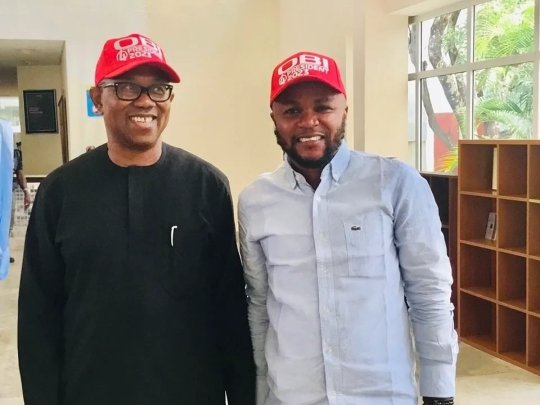
My political journey, including my service as a Personal Assistant to the late Dr Doyin Okupe and my involvement with the Obi-Datti Presidential Campaign Council, has exposed me to different political perspectives and competing visions for Nigeria.
That experience has reinforced my belief that political choices should be guided by serious consideration of national priorities rather than personal loyalty, political hostility, or the pressure to conform to a particular political camp.
Democracy gives Nigerians the freedom to reconsider their positions, evaluate policies, and make choices based on their understanding of the country’s interests.
My support for President Bola Ahmed Tinubu is rooted in the conviction that Nigeria needs a consistent economic direction, sustained infrastructure development, greater private-sector participation, and a determined effort to turn difficult reforms into lasting prosperity.
I believe the Renewed Hope Agenda provides a framework that deserves the opportunity to be strengthened and implemented more effectively. The priority now must be to accelerate delivery, correct weaknesses, and ensure that national development produces practical benefits for ordinary citizens.
Our political disagreements should not prevent us from recognising the importance of economic stability, productive investment, national unity, and responsible leadership.
The 2027 election is an opportunity to choose the direction in which we want Nigeria to move. For me, the case for President Tinubu is a case for consolidating an ongoing reform programme, building on its foundations, and demanding stronger results in the years ahead.
WHY TINUBU’S SECOND TERM SHOULD BE ABOUT DELIVERY
The next phase of the Renewed Hope Agenda must be defined by practical priorities and measurable outcomes.
First, the government must intensify efforts to improve food affordability and protect vulnerable households.
Second, it must accelerate infrastructure delivery, particularly in roads, electricity, transportation, and other sectors that reduce the cost of doing business.
Third, it must create conditions for more productive investment, stronger local manufacturing, agricultural expansion, and sustainable employment.
Fourth, it must improve access to education, vocational training, affordable financing, and entrepreneurial opportunities for young Nigerians.
Fifth, it must strengthen transparency, accountability, and public service delivery, ensuring that public resources are used efficiently and that government programmes produce measurable benefits.
These priorities are not separate from the Renewed Hope Agenda; they are essential to fulfilling its promise.
The administration has an opportunity to build on the foundations established during its first term and demonstrate that difficult economic decisions can lead to a more productive economy and a better standard of living.
For supporters of President Tinubu, the responsibility is to make the case for continuity while insisting on stronger implementation and better outcomes.
For the government, the responsibility is to justify the confidence placed in it through visible improvements in the lives of Nigerians.
And for the electorate, the responsibility is to examine the alternatives carefully and make an informed decision about the country’s future.
CONCLUSION: RENEWED HOPE MUST MEAN RENEWED RESULTS
As the 2027 general elections approach, Nigerians must look beyond political noise and focus on the decisions that will shape our country’s future for decades to come.
We must examine the records, compare the policies, question the promises, and insist on accountability. We must recognise genuine progress where evidence supports it and demand corrections wherever shortcomings remain.
For me, President Bola Ahmed Tinubu deserves the opportunity to consolidate the reforms his administration has initiated, build on the foundations already established, complete essential infrastructure projects, attract productive investment, expand economic opportunities, and accelerate the delivery of prosperity to ordinary Nigerians.
The argument for continuity is not that every challenge has been resolved. It is that Nigeria has embarked on a significant process of economic adjustment and development, and there is a compelling case for giving that process the opportunity to produce more comprehensive results under a consistent policy direction.
The next term must be about moving beyond reform announcements to stronger implementation, beyond economic adjustment to shared prosperity, and beyond promises to measurable improvements in the daily lives of citizens.
Nigeria needs leadership that can make difficult decisions, maintain a clear national development direction, learn from experience, correct mistakes, and deliver results.
That is why I believe the 2027 election presents an important opportunity to consolidate the Renewed Hope Agenda under President Bola Ahmed Tinubu.
Your vote is your voice. Examine the evidence. Compare the policies. Demand accountability. Choose the future you believe will serve Nigeria best.
For me, the choice is clear: support continuity, consolidate the reforms, accelerate development, and demand better results for every Nigerian.
TINUBU 2027: RENEWED HOPE, REFORM CONTINUITY, AND A MORE PROSPEROUS NIGERIA.
BANWO MAYOWA
Former Personal Assistant to the Late Dr Doyin Okupe
Former Member, Obi-Datti Presidential Campaign Council (PCC)
South-West Coordinator, BATIFIED OBIDIENTS