
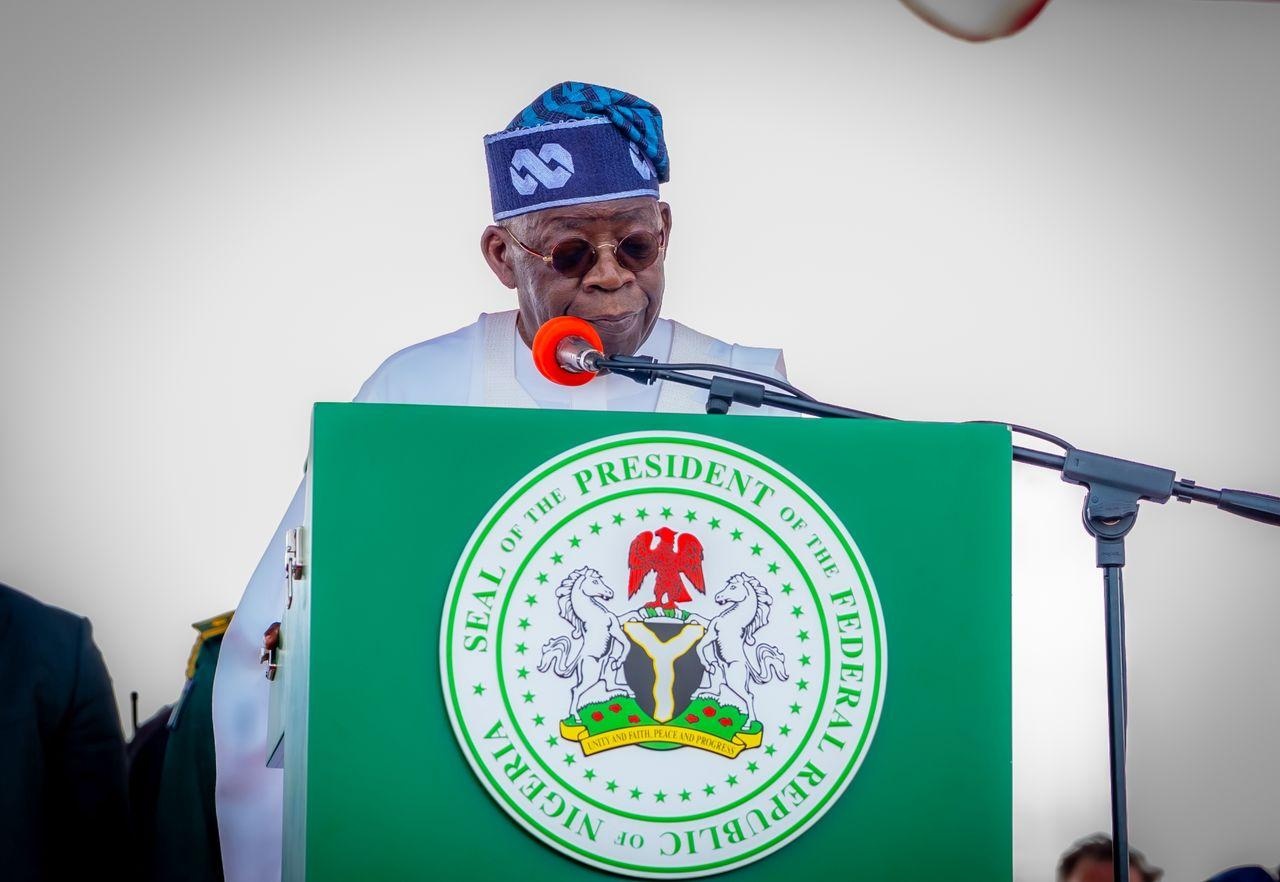
President Bola Ahmed Tinubu has urged Nigerian journalists to uphold professionalism by choosing “substance over sensation” and “credibility over clickbait,” warning that misinformation, fake news and deepfakes pose serious threats to democracy and national security.
Speaking on Thursday at the maiden State House Media Dinner in Abuja, the President reaffirmed his administration’s commitment to press freedom while reminding media practitioners that constitutional rights come with corresponding responsibilities.
Tinubu described a free press as one of the pillars of democracy, saying he has consistently defended media freedom throughout his public life.
“I am an apostle of a free press. I have defended and advocated for the rights of the media throughout my public life and will continue to do so,” he said.
He, however, stressed that journalists must ensure their reports are factual, balanced and capable of promoting national stability.
“While press freedom and free speech remain the bedrock of an open and democratic society, journalists and citizens must also not forget the imperative of balancing rights with responsibility and the duty you hold to society to report and inform with care and accuracy to facts and in a manner that ensures the society is not set on fire.”
The President expressed concern over the growing spread of misinformation, disinformation, fake news, voice and facial cloning, as well as deepfakes, describing them as some of the major challenges confronting the digital age.
He cautioned journalists against becoming channels for false or unverified information capable of undermining national security.
“The recurring incidents of misinformation, disinformation, fake news, voice and facial cloning and deep fakes are concerning. These are the drawbacks of the social media age. Media practitioners should not be willing couriers of falsehood or unverified information injurious to national security and the nation.”
Tinubu acknowledged that the relationship between government and the media is naturally defined by scrutiny and accountability, noting that while both institutions often appear to be adversaries, they remain partners in nation-building.
“Government exists to serve the people through leadership, policy, and public service. The media exists to serve society by watching those entrusted with power, asking difficult questions, and holding government accountable.”
He added that the tension between both institutions is necessary for democracy to thrive.
“The Nigerian people have deliberately assigned us these roles. Government must act. The media must watch. Government must explain. The media must question.”
Reflecting on his years in public office, Tinubu said he has experienced intense media scrutiny and sometimes contradictory reporting.
Recalling two contrasting newspaper headlines about the economy, he questioned whether sufficient context is always provided to help citizens understand national developments.
“The question is: did the media do its homework? Did it provide citizens with the context, analysis, and insight required to understand what changed? Or are we increasingly drifting towards the old newsroom creed: ‘If it bleeds, it leads’?”
The President also reflected on the 2023 election period, saying speculation and allegations often became accepted as facts before being verified.
“What fascinated me was how quickly speculation could become accepted wisdom, how allegations could become headlines, and how often conclusions arrived long before the facts.”
According to him, the experience reinforced his belief that democracy requires not only a free press but also a responsible one.
“We live in an era where misinformation and disinformation travel faster than facts. The media must choose fact over falsehood. The media must choose substance over sensation. The media must choose credibility over clickbait and the endless race for followers, likes, and viral outrage.”
He added that professional journalism remains indispensable in separating facts from rumours.
“The public depends on journalists not merely to report events but to separate fact from fiction, truth from speculation, and evidence from opinion.”
Tinubu further stressed that freedom of expression should not be abused.
“Freedom of expression is not freedom to defame. Freedom of the press is not freedom to deliberately mislead.”
He explained that laws such as the Cybercrimes Act are intended to protect citizens from malicious falsehoods, identity theft, cyberstalking and related digital crimes, insisting that such legislation is not designed to undermine press freedom.
“These safeguards are not intended to weaken press freedom. Rather, they exist to protect citizens and preserve the integrity of our information ecosystem.”
The President reaffirmed his administration’s commitment to the constitutional guarantees of press freedom and freedom of expression contained in Sections 22 and 39 of the Constitution, as well as the provisions of the Freedom of Information Act.
Beyond media issues, Tinubu highlighted what he described as progress recorded by his administration in economic reforms, security and governance.
He said the economy is gradually stabilising, public revenues have improved, foreign reserves have increased, investor confidence is returning, while the oil and gas sector and capital market are witnessing renewed growth.
On security, Tinubu said military operations have intensified across various theatres, intelligence gathering has improved, and collaboration among security agencies has been strengthened.
“As a result, thousands of criminal elements and terrorists have been neutralised. Numerous hostages have been rescued. Communities previously under threat have been reclaimed.”
He maintained that although security challenges persist, the government has shifted from merely reacting to threats to systematically degrading criminal networks.