
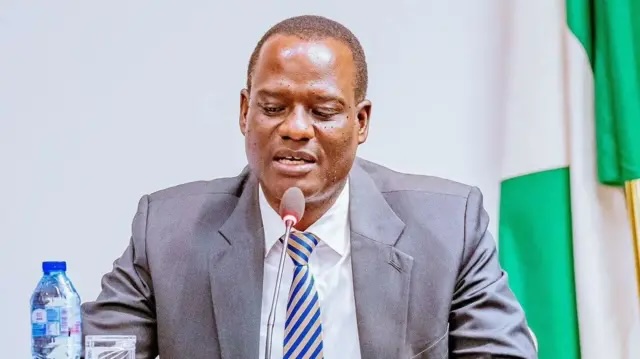
Federal Ministry of Finance has dismissed claims that the Federal Government spent 124 per cent of its revenue on interest payments in the first half of 2026, describing the conclusion as misleading and lacking proper context.
In a statement issued on Sunday in Abuja, the ministry said recent public commentary based on the World Bank’s October 2026 Nigeria Development Update misrepresented the country’s debt position by comparing incomplete revenue figures with a broader debt obligation.
According to the ministry, the Federal Government’s interest payments should not be interpreted as consuming 124 per cent of revenue, insisting that the more accurate full-year interest payment ratio is below 60 per cent.
The ministry explained that the interest figure used in the analysis includes debts serviced by the Federal Government on behalf of other tiers of government, including external loans obtained by states.
It also noted that the revenue figures cited in the report excluded income already generated by government agencies and enterprises but yet to be remitted to the Treasury, while additional tax revenues are usually realised in the second half of the year.
The statement said this explains why the debt-service-to-revenue ratio stood at 156 per cent in the first half of 2025, but dropped to below 60 per cent for the full year after total revenues were accounted for.
The ministry argued that government reforms have strengthened revenue generation, saying federal revenue increased by 72 per cent, from ₦3.6 trillion in the first half of 2025 to ₦6.2 trillion during the same period in 2026.
It added that interest payments increased by 38 per cent, from ₦5.6 trillion to ₦7.7 trillion, meaning revenue is growing much faster than debt servicing costs.
According to the ministry, the interest-to-revenue ratio declined from 156 per cent to 124 per cent within one year, while the difference between interest payments and revenue narrowed from ₦2 trillion to ₦1.5 trillion, which it described as evidence that ongoing reforms are producing results.
The ministry further stated that debt sustainability should be assessed using full-year figures rather than six-month data, noting that the same World Bank report projects Nigeria’s full-year 2026 debt service, including both interest and principal repayments, at 46 per cent of revenue.
It also stressed that all Federal Government borrowing is lawful, approved by the National Assembly under the 2026 Appropriation Act and carried out in line with the Fiscal Responsibility Act 2007 and the Debt Management Office (Establishment) Act 2003.
The ministry said the Debt Management Office regularly publishes details of government borrowing to ensure transparency and accountability.
It concluded by welcoming public scrutiny of government finances but urged analysts and commentators to interpret fiscal data carefully, compare similar figures and seek clarification where necessary to avoid misleading conclusions.