
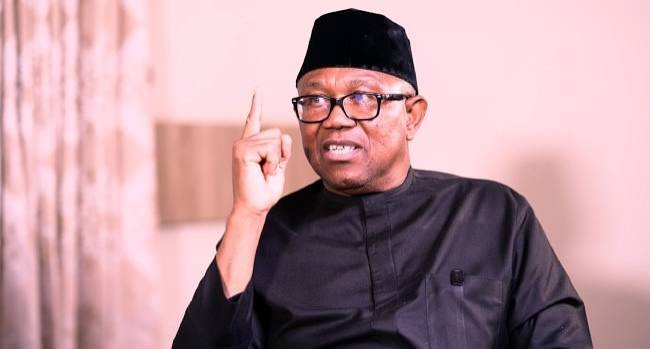
Nigeria Democratic Congress (NDC) presidential candidate, Peter Obi, has raised concern over the country’s education crisis, warning that urgent steps are needed to protect the future of Nigerian children.
Obi spoke on Friday after visiting Sheda and Sheda Galadima communities in Kwali Area Council of the Federal Capital Territory (FCT), where he said he saw many school-age children outside classrooms during school hours.
He said some of the children told him they had been at home for over two weeks because of an ongoing teachers’ strike.
The former Anambra State governor described the situation as worrying, especially with Nigeria already facing a high number of out-of-school children.
“While we are busy inaugurating campaign councils with pomp and pageantry and declaring economic miracles, our young children of school age are loitering in the streets because of a strike, in a nation with already over 18 million out-of-school children,” Obi said.
He stressed that education remains a key driver of national development, adding that successful countries invested heavily in education, healthcare and poverty reduction.
“Education remains the most important tool for development and nation-building. The more educated a nation is, the better it develops,” he stated.
Obi linked Nigeria’s rising poverty level to poor investment in critical sectors, saying children and their future must become a priority in government decisions.
“It is time to put our children and the future of our country back at the centre of governance,” he said.
He called on relevant authorities to resolve the teachers’ strike and ensure that pupils return to school.
Obi also promised that education, healthcare and poverty reduction would remain key priorities under his leadership agenda.
“Under our leadership, investment in health and education, as well as pulling people out of poverty, will be our priorities,” he added.
Nigeria’s education sector has continued to face challenges, including inadequate infrastructure, teacher shortages and a large number of children who are out of school. Stakeholders have continued to call for more investment and better policies to improve access to quality education.