
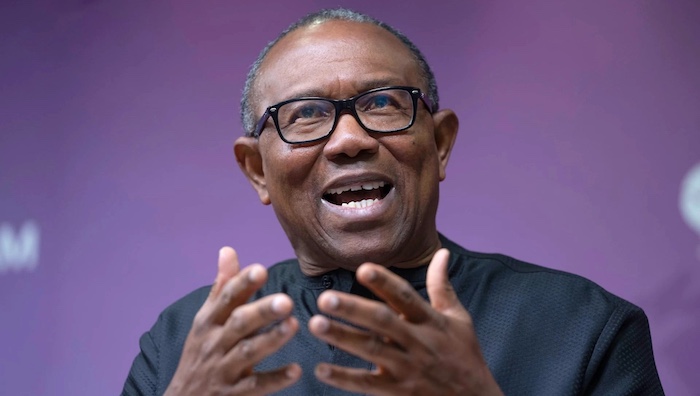
Former Labour Party presidential candidate, Peter Obi, has expressed concern over the poor state of education in parts of Nigeria despite huge donor support received over the years, saying the crisis reflects failures in leadership, accountability and governance rather than lack of funding.
In a post shared on X, Obi reacted to recent comments by the Minister of Education, noting that the North-West and North-East regions reportedly received nearly 80 percent of educational donor funding within the last decade, yet still account for the country’s lowest literacy and numeracy rates.
According to him, “This issue goes beyond just a lack of funding; it highlights failures in leadership, accountability, and governance. Financial resources alone do not guarantee proper education. What truly makes a difference in education is the responsible and transparent management of these funds, aimed at achieving tangible results and a genuine commitment to developing human capital.”
The former Anambra governor lamented that millions of Nigerian children still lack basic reading and writing skills despite repeated government budgets, donor interventions and educational programmes.
“We cannot continue to commend government budgets, donor contributions, and various intervention programs while millions of children in Nigeria still lack basic reading and writing skills, which are essential for thriving in today’s world,” he stated.
Obi further described the situation as a national tragedy, warning that the country risks deeper poverty, insecurity and unemployment if education continues to suffer neglect.
“The real tragedy lies not just in the numbers, but in the lost potential of countless children whose futures are being compromised by systemic inefficiency and corruption,” he said.
He added: “Nigeria’s most valuable asset is not its oil, politics, or propaganda. It resides in the human capital of our youth. A country that overlooks education is essentially setting itself up for cycles of poverty, insecurity, unemployment, and instability in the future.”
Calling for greater scrutiny in the management of public and donor funds, Obi stressed that every investment in education must produce measurable results in literacy, school enrollment, teacher performance and learning outcomes.
“The Minister’s statement should prompt a national dialogue on how public funds and donor contributions are utilised. Every kobo spent on education must lead to clear improvements in literacy rates, school enrollment, teacher performance, and overall learning outcomes. Anything less is unacceptable,” he stated.
Obi also pointed to countries such as China, India, Indonesia, Vietnam and Bangladesh as examples of nations that prioritised education as a pathway to rapid development.
He urged Nigerian leaders to move beyond rhetoric and focus on practical reforms capable of transforming the sector.
“Now, Nigeria must transition from mere discussions about education to achieving real outcomes. We need to construct schools, train teachers, modernise educational systems, enhance monitoring processes, and ensure every intervention directly benefits the children it is meant to serve, rather than being siphoned off by political intermediaries and bureaucratic systems,” Obi added.
He concluded by saying, “A nation’s progress is closely linked to the quality of its education system. A brighter future for Nigeria is achievable!”