
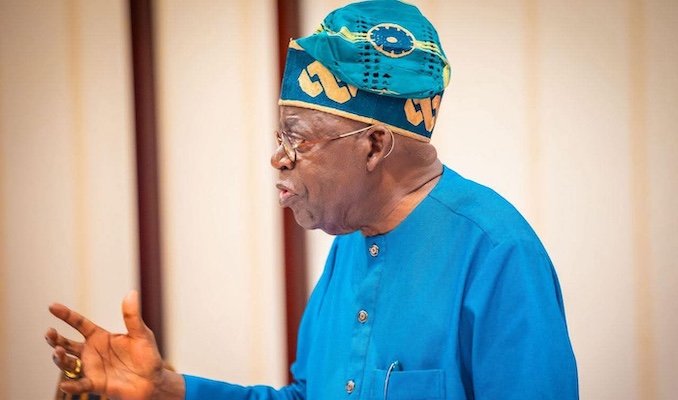
President Bola Tinubu has called on civil society organisations (CSOs) across the country to align more closely with his administration’s development agenda, urging them to prioritise national interests and reject foreign funding that could undermine Nigeria’s sovereignty and development objectives.
Speaking at the Southern Civil Society Organisations Summit in Lagos on Wednesday, the President said CSOs must move beyond being perceived solely as critics of government and instead become active partners in driving sustainable development, good governance, poverty reduction and human capital development.
The President was represented at the summit by the Secretary to the Government of the Federation (SGF), Senator George Akume (CON).
Speaking on the theme,”Nigeria First and Sustainable Development,” Tinubu commended civil society groups for their contributions during the COVID-19 pandemic, flood disasters and other national emergencies, describing their interventions as patriotism in action.
He said: “Nigeria First does not mean Nigeria alone. It speaks to every policy, partnership and public investment that prioritises the welfare of Nigerians as the main goal. It also means that our development must be inclusive, climate resilient and future facing in a manner that is underpinned by purposeful partnership.”
Declaring the event open, he said civic organisations played crucial roles in public enlightenment, accountability, humanitarian support and community mobilisation.
The President stressed that the summit’s theme aligns with the objectives of his Renewed Hope Agenda and the administration’s eight priority areas, which include economic reforms, national security, food security, infrastructure development, education, healthcare, industrialisation and improved governance.
According to him, civil society groups are vital partners in delivering these goals and ensuring better outcomes for Nigerians.
Tinubu identified food security as a major area for collaboration, warning that forecasts of prolonged rainfall and heightened flood risks in several southern states could threaten livelihoods and agricultural production.
He urged CSOs to work with government and communities to promote climate-smart agriculture, support farmers and fishermen, protect wetlands and restore mangroves that serve as natural buffers against environmental disasters.
President Tinubu also highlighted job creation and enterprise development as critical pathways to poverty eradication, pointing to opportunities in the marine and blue economy, renewable energy and climate-related industries.
He said greater cooperation between governments, civil society and the private sector would help create sustainable jobs for young people and women across the southern region.
On governance, Tinubu assured participants that his administration welcomes constructive scrutiny and accountability mechanisms. He encouraged civil society organisations to deepen their involvement in budget tracking, community monitoring, data sharing and social accountability initiatives that can improve service delivery and strengthen public trust in government institutions.
The President further called for stronger collaboration in healthcare and education, noting that climate change is increasingly affecting public health through the spread of diseases such as cholera and malaria.
He cited ongoing reforms under the Federal Government’s HOPE Governance programme, being implemented in partnership with the World Bank, to improve transparency, financing and workforce management in basic education and primary healthcare.
Tinubu, however, warned civil society organisations to exercise caution in accepting foreign funding, insisting that national interest and ethical considerations must guide their operations.
“I find it patriotic and compelling to admonish you all to remain cautious of the negative impact of foreign influence in whatever cause you pursue. In all circumstances, national interest and ethical considerations must drive your acceptance of funding that may be detrimental. Above all, proliferation of CSOs must be avoided so the terrain is not taken over by criminally minded and ethically deficient players,” he said.
He advocated self-regulation within the sector and cautioned against the unchecked proliferation of CSOs, saying it could create opportunities for criminal and unethical actors to infiltrate the civic space.
“This democratically elected government under my leadership is never averse to constructive scrutiny because we welcome partnership that improves results. I therefore invite our civil society organisations to deepen their contribution through budget tracking, community monitoring, data sharing, social accountability and practical scorecards that help government deliver better outcomes.
Reaffirming his administration’s commitment to structured engagement with civil society, the President urged participants to produce practical resolutions from the summit and announced plans for a National Civil Society Organisations Summit scheduled to hold in Abuja later this year.